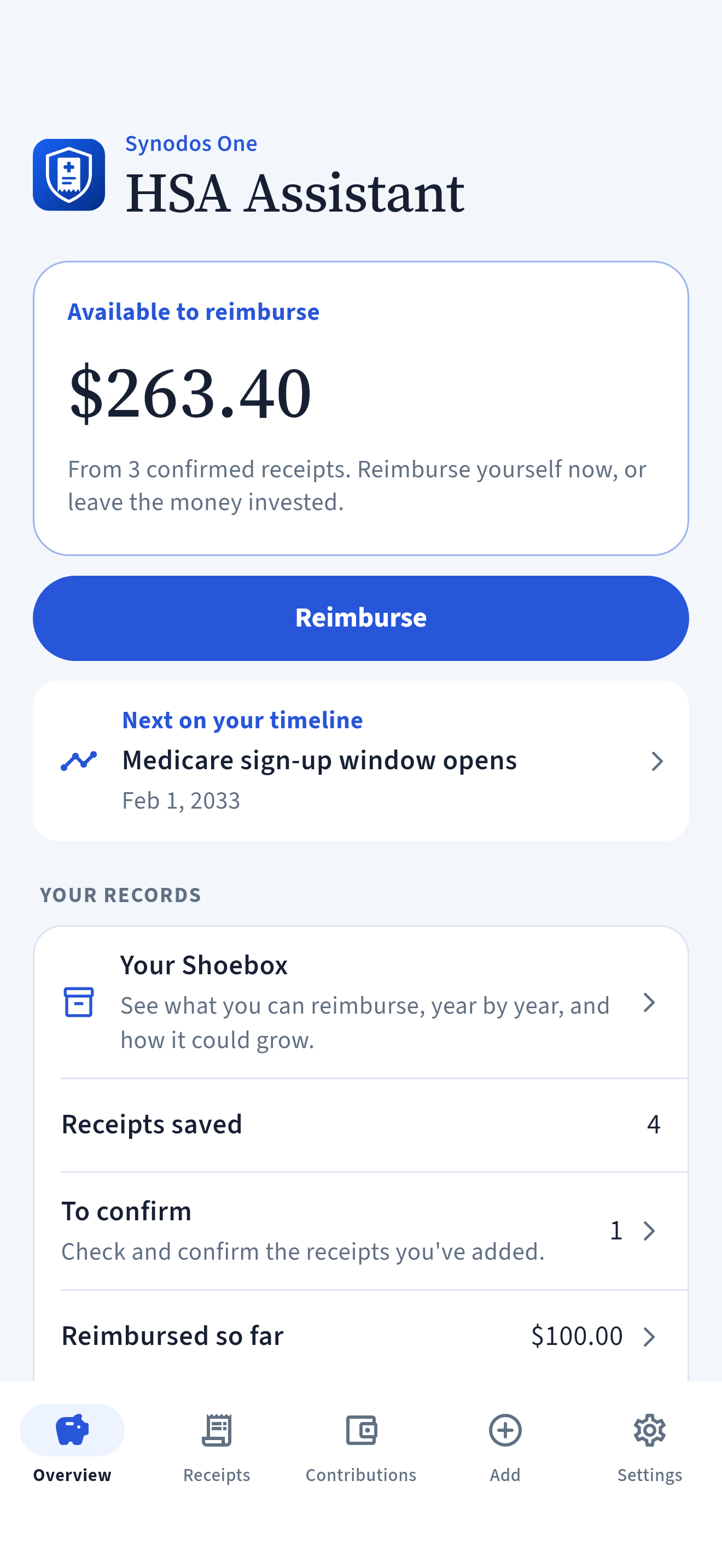
An HSA can save you taxes three ways. Money goes in before tax. It can be invested, and its growth isn’t taxed. And it comes out tax-free when you use it for qualified medical expenses. These are the medical, dental and vision costs the IRS allows, such as doctor visits, prescriptions and glasses.
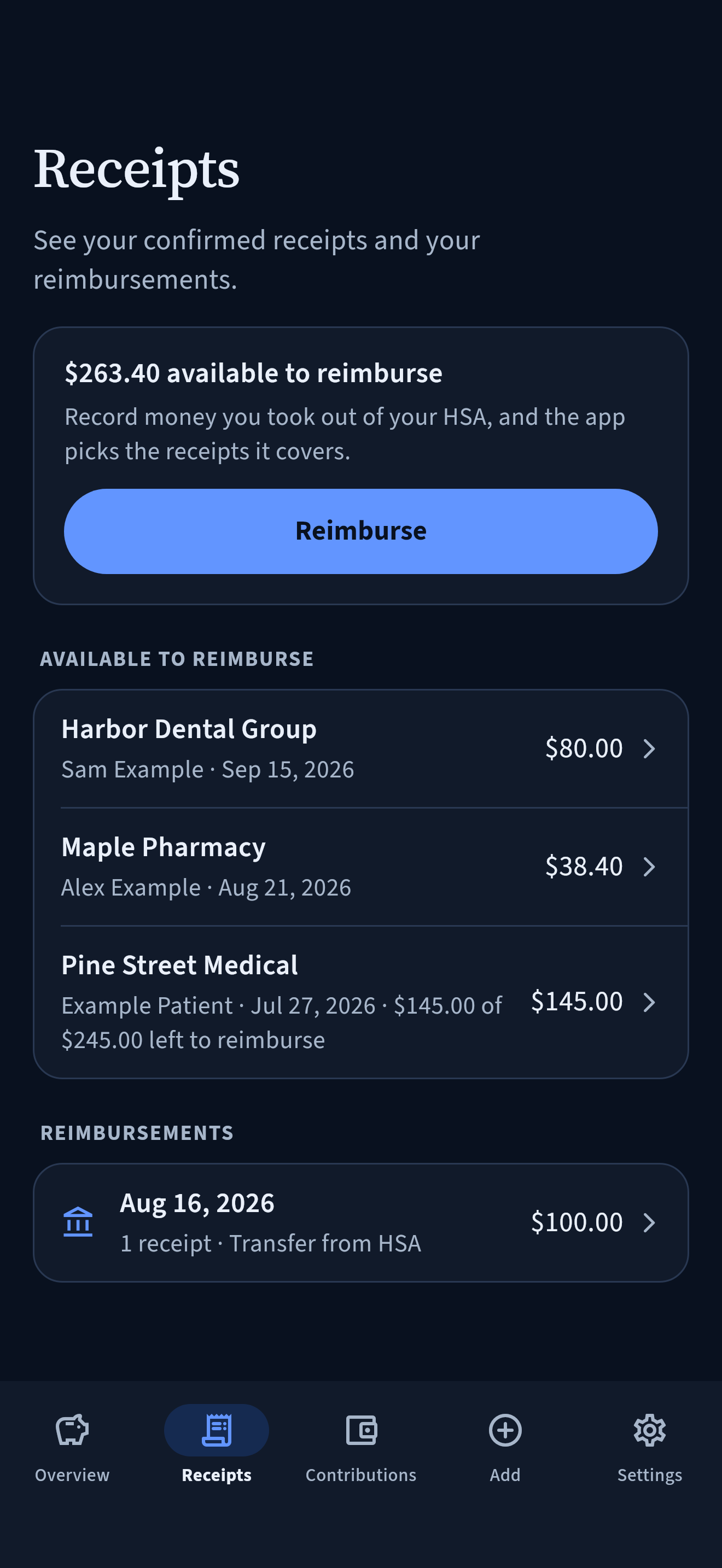
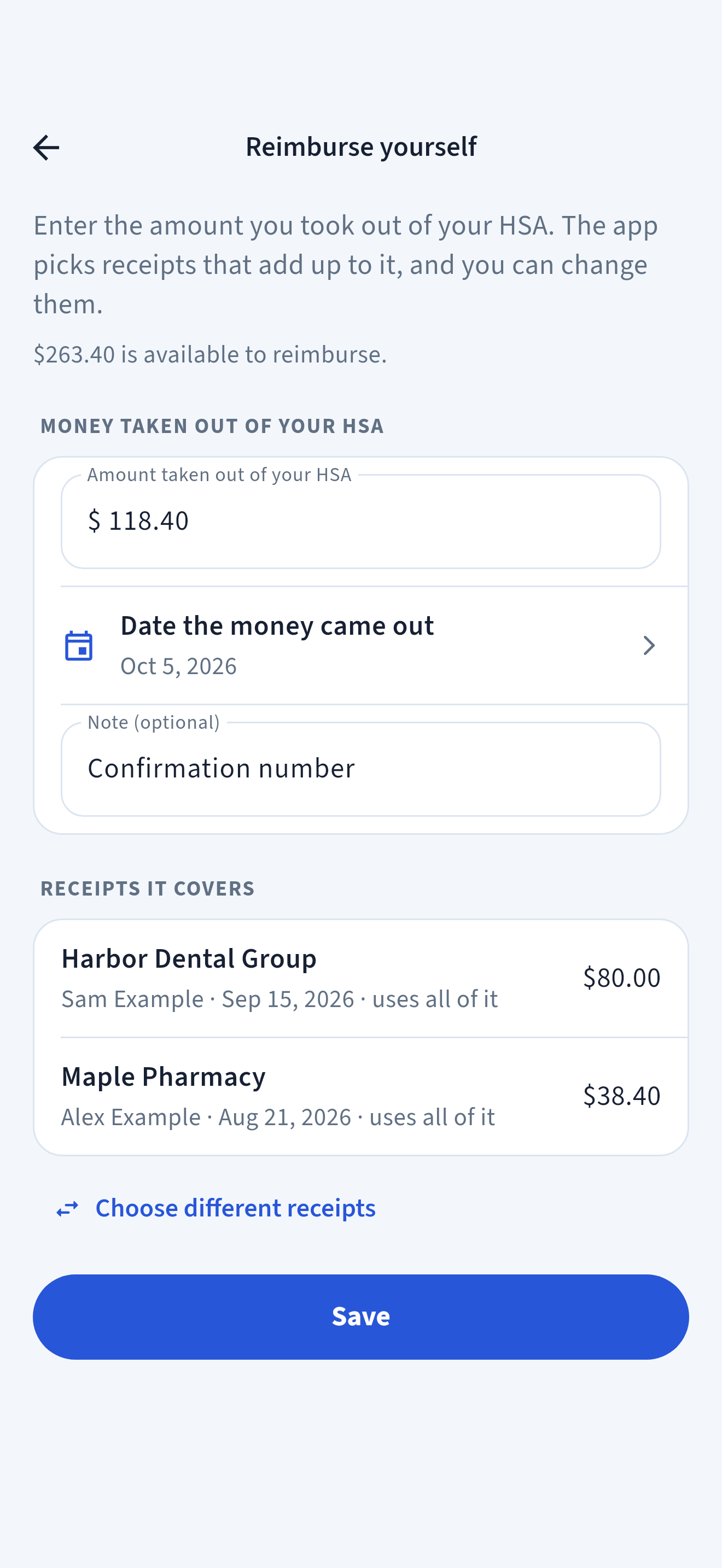
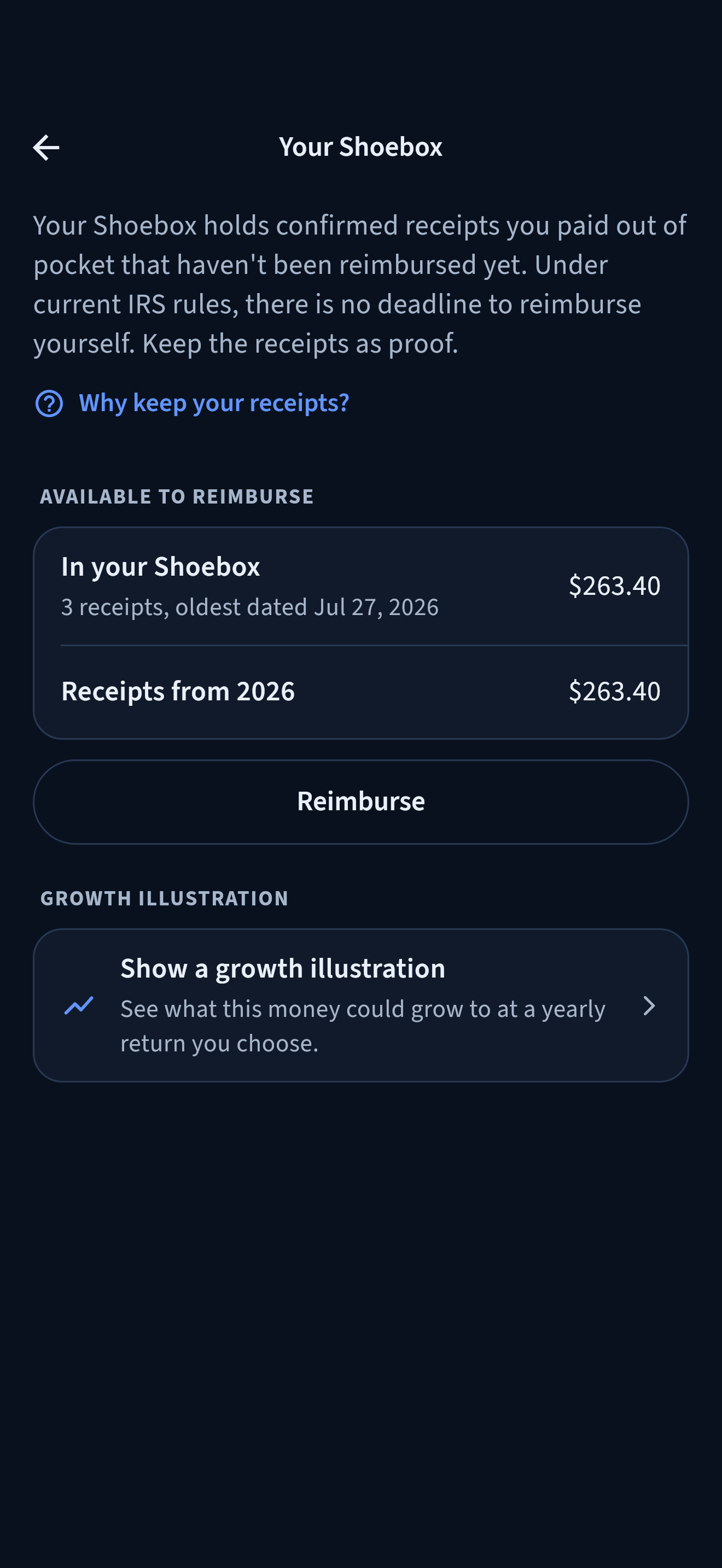
The Shoebox method. Pay medical bills yourself now, keep the receipts in your Shoebox, and leave your HSA invested. Later, even years later, you can reimburse yourself for those expenses, tax-free at any age. A reimbursement is money you take out of your HSA to cover a qualified medical expense you paid for yourself. In the meantime, the money in your HSA can grow.
The catch is proof. Under current IRS rules, there’s no deadline to reimburse yourself if the expense came after your HSA was opened, no one else (such as insurance) has repaid you, you haven’t deducted it on a tax return, and you keep the receipts. HSA Assistant keeps that proof for you.
Good to know. Investments can lose value, and nothing here is a promise of growth. Reimbursing yourself right away is fine too. California and New Jersey tax HSAs differently. This is general information, not tax advice. For details, see IRS Publication 969.
You decide which expenses qualify, when to reimburse yourself, and what to share.